

-
1 sequence contacts
Большой англо-русский и русско-английский словарь > sequence contacts
-
2 sequence contacts
Англо-русский словарь технических терминов > sequence contacts
-
3 sequence contacts
2) Автоматика: последовательно действующие контакты -
4 sequence contacts
последовательно действующие контакты, последовательно включённые контактыEnglish-Russian dictionary of mechanical engineering and automation > sequence contacts
-
5 sequence contacts
• последователно включени контактиEnglish-Bulgarian polytechnical dictionary > sequence contacts
-
6 sequence-controlled contacts
sequence-controlled contacts Folgekontakte mplEnglish-German dictionary of Electrical Engineering and Electronics > sequence-controlled contacts
-
7 sequence-controlled contacts
контакты с определённой последовательностью переключений
—
[Я.Н.Лугинский, М.С.Фези-Жилинская, Ю.С.Кабиров. Англо-русский словарь по электротехнике и электроэнергетике, Москва, 1999 г.]Тематики
- электротехника, основные понятия
EN
Англо-русский словарь нормативно-технической терминологии > sequence-controlled contacts
-
8 sequence-controlled contacts
2) Электротехника: контакты с определённой последовательностью переключенийУниверсальный англо-русский словарь > sequence-controlled contacts
-
9 sequence-controlled contacts
• kontaktiodređenog redosleda ra -
10 sequence-controlled contacts
• ohjelmakoskettimet -
11 sequence-controlled contacts
• контакти с определена последователност на комутацияEnglish-Bulgarian polytechnical dictionary > sequence-controlled contacts
-
12 последовательно включенные контакты
Большой англо-русский и русско-английский словарь > последовательно включенные контакты
-
13 последовательно включенные контакты
Англо-русский словарь технических терминов > последовательно включенные контакты
-
14 contact
1) контакт, касание, соприкосновение || контактировать, соприкасаться2) эл. контакт4) установление связи, вступление (вхождение) в связь || выходить на связь6) рлк обнаружение; захват ( цели)•-
a-contact
-
actual contact
-
adhesive contact
-
adjustable contact
-
adjustable touching contact
-
alloyed contact
-
all-round contact
-
all-wheel ground contact
-
amateur contact
-
anvil contact
-
approach contact
-
arcing contact
-
arm contact
-
armature contact
-
auxiliary contact
-
back contact
-
ball contact
-
base contact
-
bayonet contact
-
b-contact
-
beam-lead contact
-
bellows contact
-
bifurcated contact
-
bimetallic contact
-
blade contact
-
blocking contact
-
body contact
-
bouncing contacts
-
bow contact
-
break contact
-
break-before-make contact
-
break-make contact
-
bridge-type contact
-
bridge contact
-
bridging contact
-
brush contact
-
bump contact
-
buried contact
-
butt contact
-
change-over contact with neutral position
-
change-over contact
-
chattering contacts
-
circumferential contact
-
closed contact
-
collector contact
-
concentrated contact
-
concentric contact
-
conformal contact
-
continuous contact
-
convex-concave contact
-
convex-convex contact
-
coplanar contact
-
crimp contact
-
dead contact
-
direct refrigerant contact
-
discrete contact
-
distributed contact
-
docking ring contact
-
double tooth contact
-
double-break contact
-
double-throw contact
-
dressed contact
-
dry contact
-
dry-reed contact
-
EHD contact
-
elastic contact
-
elastic-plastic contact
-
elastohydrodynamic contact
-
electric contact
-
elementary contact
-
emitter contact
-
external contact
-
face contact
-
female contact
-
ferreed contact
-
filter contact
-
finger contact
-
firm contact
-
first contact
-
fixed contact
-
flight visual contact
-
floating contact
-
frictional contact
-
frictionally heated contact
-
front contact
-
grinding contact
-
ground contact
-
hard contact
-
head-to-oxide contact
-
heavily stressed contact
-
hermaphroditic contact
-
high-resistance contact
-
indirect refrigerant contact
-
initial contact
-
initial docking contact
-
injecting contact
-
instantaneous contact
-
intercell ohmic contact
-
interdigitated back contact
-
internal contact
-
intimate contact
-
jack-in contact
-
keep-alive contact
-
knife- type contact
-
knife contact
-
line contact
-
linear contact
-
liquid contact
-
live contact
-
localized contact
-
locking contact
-
loose contact
-
low-impedance contact
-
low-level contact
-
low-resistance contact
-
lubricated contact
-
magnetically operated contact
-
make contact
-
make-before-break contact
-
make-break contact
-
male contact
-
mechanical contact
-
mercury-wetted contact
-
mid-position contact
-
movable contact
-
multiple contact
-
multiple-point contact
-
needle pinion contact
-
nominal contact
-
nonbridging contact
-
nonrectifying contact
-
nonshorted contact
-
nonsliding contact
-
normally closed contact
-
normally open contact
-
normally-off contact
-
normally-on contact
-
off-limit contacts
-
ohmic contact
-
one-pair contact
-
physical contact
-
pin contact
-
pinpoint contact
-
plastic contact
-
plug contact
-
plunger hermetically sealed contact
-
point contact
-
polarized contacts
-
poor contact
-
pressed contact
-
press-fit contact
-
pressure contact
-
printed contact
-
push-button contact
-
push contact
-
push-on contact
-
quick-action contact
-
radar contact
-
radio contact
-
rail contact
-
real contact
-
rear contact
-
rectifying contact
-
reed contact
-
relay contact
-
removable contact
-
rendezvous contact
-
resilient contact
-
retaining contact
-
rocking contact
-
rolling contact
-
rotor contact
-
screen printed contact
-
sealed contact
-
sealing contact
-
self-aligned contact
-
self-holding contact
-
self-registered contact
-
sequence contacts
-
shared contact
-
short-circuit contact
-
shorting contact
-
single contact
-
single tooth contact
-
slider contact
-
slow-action contact
-
snap-action contact
-
snap-on contact
-
socket contact
-
soft contact
-
solder contact
-
soldered contact
-
solderless contact
-
space station/spacecraft initial contact
-
spitted contacts
-
spring contact
-
spring-loaded contact
-
stake contact
-
static contact
-
steady state contact
-
strip contact
-
surface contact
-
switching contact
-
switch contact
-
target contact
-
thermocouple contact
-
thermoelastic contact
-
throwable contact
-
tool/work contact
-
train-to-wayside contact
-
transfer contact
-
transient thermoelastic contact
-
transition contact
-
tuning fork contact
-
twin-break contact
-
two-way contact
-
uniform contact
-
unlubricated contact
-
vacuum sealed contact
-
viscoelastic contact
-
wet contact
-
wiping contact
-
wire-to-wire contact
-
wrap contact -
15 contact
1) контакт; соприкосновение || контактировать; касаться, соприкасаться || контактный; касающийся, соприкасающийся2) контакт; соединение•- antirotational contact
- approach contact
- arcing contact
- auxiliary contact
- back contact
- ball contact
- bank contact
- base contact
- bearing contact
- bodily contact
- braking contact
- break contact
- break-make contact
- bridge contact
- brush contact
- butt contact
- changeover contact with neutral position
- changeover contact
- changeover make-before-break contact
- circuit closing contact
- circuit opening contact
- clip contact
- continuous contact
- control contact
- corner contact
- dead contact
- double contact
- double-throw contact
- double-tooth contact
- dry contact
- early contacts
- earth contact
- earthing contact
- edge board contacts
- edge contact
- elastic contact
- elastic deformation contact
- electrical contact
- face contact
- female contact
- finger contact
- fixed contact
- fixed-point contact
- flank contact
- flanking contact
- flanking tooth contact
- flush contact
- frictional contact
- gas-filled contact
- gear contact
- grinding contact
- grounding contact
- hard contact
- heavy contact
- high-pressure gas-filled contact
- impulse contact
- insulated contact
- interfacial contact
- intimate contact
- involute contact
- laminated contact
- light contact
- limit contact
- line contact
- live contact
- localized tooth contact
- magnetically operated contact
- main contact
- make contact
- make-before-break contact
- make-break contact
- making contact
- male contact
- memory sealed contact
- mercury wetted contact
- metal-to-metal contact
- metering contact
- mid-position contact
- movable contact
- multiple-tooth contact
- needle-pinion contact
- nonbridging contact
- normally closed contact
- normally open contact
- normally opened contact
- one-pair contact
- operating contact
- oscillating contact
- output contact
- passing contact
- phasing contact
- plastic contact
- plug contact
- plunger-type contact
- point contact
- polarized contact
- positive contact
- preliminary contacts
- premature contact
- pressure contact
- printed contact
- progressive contact
- push-button contact
- radius contact
- recombination contact
- rectifying contact
- reed contact
- rest contact
- resting contact
- roller contact
- rolling contact
- rotational contact
- rubbing contact
- sealed contact
- sealed strip contact
- sensitive contact
- sequence contacts
- servo contact
- shut-off contact
- single-tooth contact
- sliding contact
- sparking contact
- spherical contact
- stationary contact
- switch contact
- switching contact
- tactile contacts
- terminal contact
- three-pad contact
- throwable contact
- tool contact
- tool/work contact
- tooth contact
- tooth contacts per minute
- transfer contact
- two-pair contact
- two-point contact
- two-way contact
- vacuum contact
- wetted contact
- wiper-type switch contact
- working contactEnglish-Russian dictionary of mechanical engineering and automation > contact
-
16 relay
1) реле5) ретрансляция; переприём || ретранслировать•relay with latching — реле с механической самоблокировкой, реле с механической фиксацией воздействия
- ac relay- acoustic relay
- active-power relay
- add-and-subtract relay
- alarm relay
- Allström relay
- all-to-all relay
- annunciation relay
- antenna relay
- antiplugging relay
- armature relay
- auxiliary relay
- balanced relay
- baseband relay
- biased relay
- bistable relay
- blocking relay
- break-in relay
- calling relay
- capacitance relay
- center-stable polar relay
- clapper relay
- clearing relay
- close-differential relay
- closing relay
- coaxial relay
- code relay
- command relay
- compelled relay
- conductance relay
- connector relay
- contact relay
- contactless relay
- continuous duty relay
- control relay
- correed relay
- current relay
- dc relay
- definite-purpose relay
- delay relay
- diaphragm relay
- differential relay
- digital radio relay
- direct-action relay
- directional relay
- directional-current relay
- directional-overcurrent relay
- directional-polarity relay
- directional-power relay
- directional-resistance relay
- directional-voltage relay
- directivity relay
- distance relay
- dry-reed relay
- earth-fault relay
- electrical relay
- electrical-mechanical relay
- electromagnetic relay
- electromechanical relay
- electronic relay
- electronic-tube relay
- electrostatic relay
- electrostrictive relay
- enclosed relay
- extraterrestrial relay
- fast-operate relay
- fast-packet frame-relay
- fast-release relay
- fault selective relay
- ferrodynamicrelay
- field application relay
- field loss relay
- flat-type relay
- flow relay
- frequency relay
- frequency-selective relay
- frequency-sensitive relay
- gas-filled relay
- gas-filled reed relay
- general-purpose relay
- ground relay
- ground protective relay
- group-selector relay
- guard relay
- heavy-duty relay
- hermetically sealed relay
- high G-relay
- high-speed relay
- homing relay
- hot-wire relay
- impedance relay
- indicating relay
- indirect-action relay
- inertia relay
- initiating relay
- instantaneous overcurrent relay
- instrument-type relay
- integrating relay
- interlock relay
- intersatellite relay
- key relay
- Kipp relay
- lag relay
- latch-in relay
- latching relay
- LED-coupled solid-state relay
- light relay
- light-activated switching relay
- line relay
- line-break relay
- locking relay
- lockout relay
- lock-up relay
- logic relay
- magnetic reed relay
- magnetostrictive relay
- manual-automatic relay
- marginal relay
- mechanical locking relay
- memory relay
- mercury relay
- mercury-contact relay
- mercury-wetted reed relay
- metering relay
- meter-type relay
- mho relay
- microwave relay
- microwave-radio relay
- motor-field failure relay
- multiposition relay
- NC relay
- net-to-net relay
- network relay
- network master relay
- network phasing relay
- neutral relay
- NO relay
- nonpolarized relay
- normally-closed relay
- normally-open relay
- notching relay
- open relay
- open-phase relay
- oscillating relay
- overcurrent relay
- overfrequency relay
- overload relay
- overpower relay
- overvoltage relay
- percentage-differential relay
- phase-balance relay
- phase-reversal relay
- phase-rotation relay
- phase-sequence relay
- phase-shift relay
- photoelectric relay
- plunger relay
- polar relay
- polarized relay
- polyphase relay
- power relay
- pressure relay
- protective relay
- pulse reed relay
- radar relay
- radio relay
- ratchet relay
- rate-of-change relay
- rate-of-change temperature relay
- rate-of-rise relay
- ratio-balance relay
- ratio-differential relay
- reactance relay
- reactive-power relay
- reclosing relay
- reed relay
- register relay
- regulating relay
- remanent relay
- reset relay
- residual relay
- resistance relay
- resonant-reed relay
- reverse relay
- reverse-current relay
- ringing relay
- rotary stepping relay
- satellite relay
- selector relay
- self-latching relay
- semiconductor relay
- sensitive relay
- separating relay
- sequence relay
- sequential relay
- side-stable relay
- signal-actuated relay
- single-phase relay
- slave relay
- slow-acting relay
- slow-action relay
- slow-cutting relay
- slow-operate relay
- slow-release relay
- solenoid relay
- solid-state relay
- space relay
- speed-sensitive relay
- spring-actuated stepping relay
- SR relay
- stepping relay
- storage relay
- supersensitive relay
- surge relay
- synchronizing relay
- tape relay
- temperature relay
- test relay
- thermal relay
- thermostat relay
- three-position relay
- three-step relay
- time relay
- time-delay relay
- timing relay
- transformer-coupled solid-state relay
- transhorizon radio relay
- trip-free relay
- tripping relay
- trunk relay
- tuned relay
- two-position relay
- two-step relay
- undercurrent relay
- underfrequency relay
- underpower relay
- undervoltage relay
- vacuum reed relay
- valve relay
- vibrating relay
- voltage relay
- zero phase-sequence relay -
17 relay
1) реле5) ретрансляция; переприём || ретранслировать•relay with latching — реле с механической самоблокировкой, реле с механической фиксацией воздействия
- ac relay- acoustic relay
- active-power relay
- add-and-subtract relay
- alarm relay
- Allström relay
- all-to-all relay
- annunciation relay
- antenna relay
- antiplugging relay
- armature relay
- auxiliary relay
- balanced relay
- baseband relay
- biased relay
- bistable relay
- blocking relay
- break-in relay
- calling relay
- capacitance relay
- center-stable polar relay
- clapper relay
- clearing relay
- close-differential relay
- closing relay
- coaxial relay
- code relay
- command relay
- compelled relay
- conductance relay
- connector relay
- contact relay
- contactless relay
- continuous duty relay
- control relay
- correed relay
- current relay
- dc relay
- definite-purpose relay
- delay relay
- diaphragm relay
- differential relay
- digital radio relay
- direct-action relay
- directional relay
- directional-current relay
- directional-overcurrent relay
- directional-polarity relay
- directional-power relay
- directional-resistance relay
- directional-voltage relay
- directivity relay
- distance relay
- dry-reed relay
- earth-fault relay
- electrical relay
- electrical-mechanical relay
- electromagnetic relay
- electromechanical relay
- electronic relay
- electronic-tube relay
- electrostatic relay
- electrostrictive relay
- enclosed relay
- extraterrestrial relay
- fast-operate relay
- fast-packet frame-relay
- fast-release relay
- fault selective relay
- ferrodynamic relay
- field application relay
- field loss relay
- flat-type relay
- flow relay
- frequency relay
- frequency-selective relay
- frequency-sensitive relay
- gas-filled reed relay
- gas-filled relay
- general-purpose relay
- ground protective relay
- ground relay
- group-selector relay
- guard relay
- heavy-duty relay
- hermetically sealed relay
- high G relay
- high-speed relay
- homing relay
- hot-wire relay
- impedance relay
- indicating relay
- indirect-action relay
- inertia relay
- initiating relay
- instantaneous overcurrent relay
- instrument-type relay
- integrating relay
- interlock relay
- intersatellite relay
- key relay
- Kipp relay
- lag relay
- latch-in relay
- latching relay
- LED-coupled solid-state relay
- light relay
- light-activated switching relay
- line relay
- line-break relay
- locking relay
- lockout relay
- lock-up relay
- logic relay
- magnetic reed relay
- magnetostrictive relay
- manual-automatic relay
- marginal relay
- mechanical locking relay
- memory relay
- mercury relay
- mercury-contact relay
- mercury-wetted reed relay
- metering relay
- meter-type relay
- mho relay
- microwave relay
- microwave-radio relay
- motor-field failure relay
- multiposition relay
- NC relay
- net-to-net relay
- network master relay
- network phasing relay
- network relay
- neutral relay
- NO relay
- nonpolarized relay
- normally-closed relay
- normally-open relay
- notching relay
- open relay
- open-phase relay
- oscillating relay
- overcurrent relay
- overfrequency relay
- overload relay
- overpower relay
- overvoltage relay
- percentage-differential relay
- phase-balance relay
- phase-reversal relay
- phase-rotation relay
- phase-sequence relay
- phase-shift relay
- photoelectric relay
- plunger relay
- polar relay
- polarized relay
- polyphase relay
- power relay
- pressure relay
- protective relay
- pulse reed relay
- radar relay
- radio relay
- ratchet relay
- rate-of-change relay
- rate-of-change temperature relay
- rate-of-rise relay
- ratio-balance relay
- ratio-differential relay
- reactance relay
- reactive-power relay
- reclosing relay
- reed relay
- register relay
- regulating relay
- remanent relay
- reset relay
- residual relay
- resistance relay
- resonant-reed relay
- reverse relay
- reverse-current relay
- ringing relay
- rotary stepping relay
- satellite relay
- selector relay
- self-latching relay
- semiconductor relay
- sensitive relay
- separating relay
- sequence relay
- sequential relay
- side-stable relay
- signal-actuated relay
- single-phase relay
- slave relay
- slow-acting relay
- slow-action relay
- slow-cutting relay
- slow-operate relay
- slow-release relay
- solenoid relay
- solid-state relay
- space relay
- speed-sensitive relay
- spring-actuated stepping relay
- SR relay
- stepping relay
- storage relay
- supersensitive relay
- surge relay
- synchronizing relay
- tape relay
- temperature relay
- test relay
- thermal relay
- thermostat relay
- three-position relay
- three-step relay
- time relay
- time-delay relay
- timing relay
- transformer-coupled solid-state relay
- transhorizon radio relay
- trip-free relay
- tripping relay
- trunk relay
- tuned relay
- two-position relay
- two-step relay
- undercurrent relay
- underfrequency relay
- underpower relay
- undervoltage relay
- vacuum reed relay
- valve relay
- vibrating relay
- voltage relay
- zero phase-sequence relayThe New English-Russian Dictionary of Radio-electronics > relay
-
18 Anschütz, Ottomar
SUBJECT AREA: Photography, film and optics[br]b. 1846 Lissa, Prussia (now Leszno, Poland) d. 1907[br]German photographer, chronophotographer ana inventor.[br]The son of a commercial photographer, Anschütz entered the business in 1868 and developed an interest in the process of instantaneous photography. The process was very difficult with the contemporary wet-plate process, but with the introduction of the much faster dry plates in the late 1870s he was able to make progress. Anschütz designed a focal plane shutter capable of operating at speeds up to 1/1000 of a second in 1883, and patented his design in 1888. it involved a vertically moving fabric roller-blind that worked at a fixed tension but had a slit the width of which could be adjusted to alter the exposure time. This design was adopted by C.P.Goerz, who from 1890 manufactures a number of cameras that incorporated it.Anschütz's action pictures of flying birds and animals attracted the attention of the Prussian authorities, and in 1886 the Chamber of Deputies authorized financial support for him to continue his work, which had started at the Hanover Military Institute in October 1885. Inspired by the work of Eadweard Muybridge in America, Anschütz had set up rows of cameras whose focal-plane shutters were released in sequence by electromagnets, taking twenty-four pictures in about three-quarters of a second. He made a large number of studies of the actions of people, animals and birds, and at the Krupp artillery range at Meppen, near Essen, he recorded shells in flight. His pictures were reproduced, and favourably commented upon, in scientific and photographic journals.To bring the pictures to the public, in 1887 he created the Electro-Tachyscope. The sequence negatives were printed as 90 x 120 mm transparencies and fixed around the circumference of a large steel disc. This was rotated in front of a spirally wound Geissler tube, which produced a momentary brilliant flash of light when a high voltage from an induction coil was applied to it, triggered by contacts on the steel disc. The flash duration, about 1/1000 of a second, was so short that it "froze" each picture as it passed the tube. The pictures succeeded each other at intervals of about 1/30 of a second, and the observer saw an apparently continuously lit moving picture. The Electro-Tachyscope was shown publicly in Berlin at the Kulturministerium from 19 to 21 March 1887; subsequently Siemens \& Halske manufactured 100 machines, which were shown throughout Europe and America in the early 1890s. From 1891 his pictures were available for the home in the form of the Tachyscope viewer, which used the principle of the zoetrope: sequence photographs were printed on long strips of thin card, perforated with narrow slots between the pictures. Placed around the circumference of a shallow cylinder and rotated, the pictures could be seen in life-like movement when viewed through the slots.In November 1894 Anschütz displayed a projector using two picture discs with twelve images each, which through a form of Maltese cross movement were rotated intermittently and alternately while a rotating shutter allowed each picture to blend with the next so that no flicker occurred. The first public shows, given in Berlin, were on a screen 6×8 m (20×26 ft) in size. From 22 February 1895 they were shown regularly to audiences of 300 in a building on the Leipzigstrasse; they were the first projected motion pictures seen in Germany.[br]Further ReadingJ.Deslandes, 1966, Histoire comparée du cinéma, Vol. I, Paris. B.Coe, 1992, Muybridge and the Chronophotographers, London.BC -
19 Muybridge, Eadweard
SUBJECT AREA: Photography, film and optics[br]b. 9 April 1830 Kingston upon Thames, Englandd. 8 May 1904 Kingston upon Thames, England[br]English photographer and pioneer of sequence photography of movement.[br]He was born Edward Muggeridge, but later changed his name, taking the Saxon spelling of his first name and altering his surname, first to Muygridge and then to Muybridge. He emigrated to America in 1851, working in New York in bookbinding and selling as a commission agent for the London Printing and Publishing Company. Through contact with a New York daguerreotypist, Silas T.Selleck, he acquired an interest in photography that developed after his move to California in 1855. On a visit to England in 1860 he learned the wet-collodion process from a friend, Arthur Brown, and acquired the best photographic equipment available in London before returning to America. In 1867, under his trade pseudonym "Helios", he set out to record the scenery of the Far West with his mobile dark-room, christened "The Flying Studio".His reputation as a photographer of the first rank spread, and he was commissioned to record the survey visit of Major-General Henry W.Halleck to Alaska and also to record the territory through which the Central Pacific Railroad was being constructed. Perhaps because of this latter project, he was approached by the President of the Central Pacific, Leland Stanford, to attempt to photograph a horse trotting at speed. There was a long-standing controversy among racing men as to whether a trotting horse had all four hooves off the ground at any point; Stanford felt that it did, and hoped than an "instantaneous" photograph would settle the matter once and for all. In May 1872 Muybridge photographed the horse "Occident", but without any great success because the current wet-collodion process normally required many seconds, even in a good light, for a good result. In April 1873 he managed to produce some better negatives, in which a recognizable silhouette of the horse showed all four feet above the ground at the same time.Soon after, Muybridge left his young wife, Flora, in San Francisco to go with the army sent to put down the revolt of the Modoc Indians. While he was busy photographing the scenery and the combatants, his wife had an affair with a Major Harry Larkyns. On his return, finding his wife pregnant, he had several confrontations with Larkyns, which culminated in his shooting him dead. At his trial for murder, in February 1875, Muybridge was acquitted by the jury on the grounds of justifiable homicide; he left soon after on a long trip to South America.He again took up his photographic work when he returned to North America and Stanford asked him to take up the action-photography project once more. Using a new shutter design he had developed while on his trip south, and which would operate in as little as 1/1,000 of a second, he obtained more detailed pictures of "Occident" in July 1877. He then devised a new scheme, which Stanford sponsored at his farm at Palo Alto. A 50 ft (15 m) long shed was constructed, containing twelve cameras side by side, and a white background marked off with vertical, numbered lines was set up. Each camera was fitted with Muybridge's highspeed shutter, which was released by an electromagnetic catch. Thin threads stretched across the track were broken by the horse as it moved along, closing spring electrical contacts which released each shutter in turn. Thus, in about half a second, twelve photographs were obtained that showed all the phases of the movement.Although the pictures were still little more than silhouettes, they were very sharp, and sequences published in scientific and photographic journals throughout the world excited considerable attention. By replacing the threads with an electrical commutator device, which allowed the release of the shutters at precise intervals, Muybridge was able to take series of actions by other animals and humans. From 1880 he lectured in America and Europe, projecting his results in motion on the screen with his Zoopraxiscope projector. In August 1883 he received a grant of $40,000 from the University of Pennsylvania to carry on his work there. Using the vastly improved gelatine dry-plate process and new, improved multiple-camera apparatus, during 1884 and 1885 he produced over 100,000 photographs, of which 20,000 were reproduced in Animal Locomotion in 1887. The subjects were animals of all kinds, and human figures, mostly nude, in a wide range of activities. The quality of the photographs was extremely good, and the publication attracted considerable attention and praise.Muybridge returned to England in 1894; his last publications were Animals in Motion (1899) and The Human Figure in Motion (1901). His influence on the world of art was enormous, over-turning the conventional representations of action hitherto used by artists. His work in pioneering the use of sequence photography led to the science of chronophotography developed by Marey and others, and stimulated many inventors, notably Thomas Edison to work which led to the introduction of cinematography in the 1890s.[br]Bibliography1887, Animal Locomotion, Philadelphia.1893, Descriptive Zoopraxography, Pennsylvania. 1899, Animals in Motion, London.1901, The Human Figure in Motion, London.Further Reading1973, Eadweard Muybridge: The Stanford Years, Stanford.G.Hendricks, 1975, Muybridge: The Father of the Motion Picture, New York. R.Haas, 1976, Muybridge: Man in Motion, California.B.Coe, 1992, Muybridge and the Chromophoto-graphers, London.BC -
20 DS
- цифровой стабилизатор
- Релаксация
- расширение спектра по методу прямой последовательности
- распределенное тестирование на одном уровне
- разъединитель
- прямая последовательность
- проектный стандарт
- пораженная секунда
- пароохладитель
- набор данных
- дуплексное разнесение
- динамическое рассеивание
- динамическое переключение
- двухсторонняя дискета
- водосточная труба
- вниз по потоку
- барабанный переключатель
барабанный переключатель
—
[Я.Н.Лугинский, М.С.Фези-Жилинская, Ю.С.Кабиров. Англо-русский словарь по электротехнике и электроэнергетике, Москва, 1999 г.]Тематики
- электротехника, основные понятия
EN
двухсторонняя дискета
—
[Е.С.Алексеев, А.А.Мячев. Англо-русский толковый словарь по системотехнике ЭВМ. Москва 1993]Тематики
EN
динамическое переключение
динамическая коммутация
—
[Е.С.Алексеев, А.А.Мячев. Англо-русский толковый словарь по системотехнике ЭВМ. Москва 1993]Тематики
Синонимы
EN
динамическое рассеивание
—
[Е.С.Алексеев, А.А.Мячев. Англо-русский толковый словарь по системотехнике ЭВМ. Москва 1993]Тематики
EN
дуплексное разнесение
(Радио)частотный разнос между соответствующими радиостволами прямого и обратного направлений (МСЭ-R F.746-7).
[ http://www.iks-media.ru/glossary/index.html?glossid=2400324]Тематики
- электросвязь, основные понятия
EN
набор данных
НАБОР ДАННЫХ (НД)
Идентифицированная совокупность физических записей, организованная одним из установленных в системе обработки данных способов и представляющая файлы или части файлов в среде хранения.
[ ГОСТ 20886-85]
набор данных
Множество элементов данных, объединенных в отдельное целое для решения определенной задачи.
Чаще всего набор данных представляется в виде файла, сообщения либо блока данных.
[Гипертекстовый энциклопедический словарь по информатике Э. Якубайтиса]
[ http://www.morepc.ru/dict/]
набор данных
НД
-
[ ГОСТ Р МЭК 61850-7-2-2009]
НД представляет собой набор ссылок на данные внутри информационной модели устройства. В НД могут быть включены как отдельные атрибуты данных (например, запись PTOC1.Str.general будет соответствовать одному логическому сигналу пуска защиты), так и логические узлы целиком (например PTOC1). Устройства могут поддерживать различное количество наборов данных. Кроме того, устройства могут иметь фиксированные (то есть когда набор данных нельзя изменить) либо конфигурируемые наборы данных. Также возможны различные степени свободы конфигурации наборов данных: изменение данных, изменение наименования и т.п. Использование наборов данных проиллюстрировано на рис. 3. При рассмотрении контроллера присоединения, на который заведены сигналы о положении всех разъединителей и заземлителей рассматриваемого присоединения, в устройстве должны присутствовать логические узлы, соответствующие каждому из аппаратов (в нашем случае – XSWI1...5). Примером набора данных может служить DATASET с наименованием SwitchPositions, включающий в себя элементы данных Pos каждого из указанных логических узлов. В дальнейшем составленный набор данных может использоваться, например, для сохранения событий в журнале при каждом изменении положения коммутационного аппарата (с использованием сервиса Log), отправки отчета о событии (с использованием сервиса Report) либо быстрого сообщения о событии (с использованием сервиса GOOSE). Рис. 3. Использование наборов данных
При описании информационной модели устройства в нотации МЭК 61850-6 для размещения описаний наборов данных используется системный логический узел LLN0. Наличие логического узла LLN0 является обязательным для каждого логического устройства. При этом не в каждом логическом устройстве могут размещаться наборы данных, поэтому при проектировании и наладке коммуникаций по МЭК 61850 требуется внимательно проверять размещение наборов данных в логических устройствах. Информацию о том, в каком логическом устройстве должны размещаться наборы данных,обычно предоставляет производитель в сопроводительной документации. Подробнее информация об этом будет рассмотрена в будущих публикациях, затрагивающих язык конфигурирования SCL, описанный шестой главой стандарта.
[ http://www.news.elteh.ru/arh/2012/77/04.php]
Тематики
- организация данных в сист. обраб. данных
- релейная защита
EN
пароохладитель
—
[Я.Н.Лугинский, М.С.Фези-Жилинская, Ю.С.Кабиров. Англо-русский словарь по электротехнике и электроэнергетике, Москва, 1999 г.]Тематики
- электротехника, основные понятия
EN
пораженная секунда
(МСЭ-T G.705).
[ http://www.iks-media.ru/glossary/index.html?glossid=2400324]Тематики
- электросвязь, основные понятия
EN
проектный стандарт
Проектный стандарт еще не определен окончательно, но уже опубликован. Проектные стандарты CiA неизменны в течение одного года.
[ http://can-cia.com/fileadmin/cia/pdfs/CANdictionary-v2_ru.pdf]Тематики
EN
прямая последовательность
Метод расширения спектра при передаче сигнала, основанный на умножении информационной последовательности на опорный псевдослучайный сигнал с заведомо известными свойствами. При приеме полезная информация выделяется из сигнала известной структуры с помощью алгоритмов свертки.
[Л.М.Невдяев. Мобильная связь 3-го поколения. Москва, 2000 г.]Тематики
EN
разъединитель
Контактный коммутационный аппарат, в разомкнутом положении отвечающий требованиям к функции разъединения.
Примечание.
1 Это определение отличается от формулировки МЭК 60050(441-14-05), поскольку требования к функции разъединения не ограничиваются соблюдением изолирующего промежутка.
[ ГОСТ Р 50030. 1-2000 ( МЭК 60947-1-99)]
2 Разъединитель способен включать и отключать цепь с незначительным током или при незначительном изменении напряжения на зажимах каждого из полюсов разъединителя.
Разъединитель может проводить токи в нормальных условиях работы, а также в течение определенного времени в аномальных условиях работы выдерживать токи короткого замыкания.
[ ГОСТ Р 50030. 3-99 ( МЭК 60947-3-99)]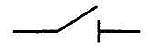 Условное обозначение контакта разъединителя
разъединитель
Контактный коммутационный аппарат, который обеспечивает в отключенном положении изоляционный промежуток, удовлетворяющий нормированным требованиям.
Примечания
1 Разъединитель способен размыкать и замыкать цепь при малом токе или малом изменении напряжения на выводах каждого из его полюсов. Он также способен проводить токи при нормальных условиях в цепи и проводить в течение нормированного времени токи при ненормальных условиях, таких как короткое замыкание.
2 Малые токи - это такие токи, как емкостные токи вводов, шин, соединений, очень коротких кабелей, токи постоянно соединенных ступенчатых сопротивлений выключателей и токи трансформаторов напряжения и делителей. Для номинальных напряжений до 330 кВ включительно ток, не превышающий 0,5 А, считается малым током по этому определению; для номинального напряжения от 500 кВ и выше и токов, превышающих 0,5 А, необходимо проконсультироваться с изготовителем, если нет особых указаний в руководствах по эксплуатации разъединителей.
3 К малым изменениям напряжения относятся изменения напряжения, возникающие при шунтировании регуляторов индуктивного напряжения или выключателей.
4 Для разъединителей номинальным напряжением от 110 кВ и выше может быть установлена коммутация уравнительных токов.
[ ГОСТ Р 52726-2007]EN
disconnector
a mechanical switching device which provides, in the open position, an isolating distance in accordance with specified requirements
NOTE – A disconnector is capable of opening and closing a circuit when either negligible current is broken or made, or when no significant change in the voltage across the terminals of each of the poles of the disconnector occurs. It is also capable of carrying currents under normal circuit conditions and carrying for a specified time currents under abnormal conditions such as those of short circuit.
[IEV number 441-14-05]
disconnector
IEV 441-14-05 is applicable with the following additional notes:
NOTE 1
"Negligible current" implies currents such as the capacitive currents of bushings, busbars, connections, very short lengths of cable, currents of permanently connected grading impedances of circuit-breakers and currents of voltage transformers and dividers. For rated voltages of 420 kV and below, a current not exceeding 0,5 A is a negligible current for the purpose of this definition; for rated voltage above 420 kV and currents exceeding 0,5 A, the manufacturer should be consulted.
"No significant change in voltage" refers to such applications as the by-passing of induction voltage regulators or circuit-breakers.
NOTE 2
For a disconnector having a rated voltage of 52 kV and above, a rated ability of bus transfer current switching may be assigned
[IEC 62271-102]FR
sectionneur
appareil mécanique de connexion qui assure, en position d'ouverture, une distance de sectionnement satisfaisant à des conditions spécifiées
NOTE – Un sectionneur est capable d'ouvrir et de fermer un circuit lorsqu'un courant d'intensité négligeable est interrompu ou établi, ou bien lorsqu'il ne se produit aucun changement notable de la tension aux bornes de chacun des pôles du sectionneur. Il est aussi capable de supporter des courants dans les conditions normales du circuit et de supporter des courants pendant une durée spécifiée dans des conditions anormales telles que celles du court-circuit.
[IEV number 441-14-05]Указанные в 5.3.2 перечислениях а)-d) устройства отключения ( выключатель-разъединитель, разъединитель или выключатель) должны:
- изолировать электрооборудование от цепей питания и иметь только одно положение ОТКЛЮЧЕНО (изоляция) и одно положение ВКЛЮЧЕНО, четко обозначаемые символами «О» и «I» [МЭК 60417-5008 (DB:2002-10) и МЭК 60417-5007 (DB:2002-10), см. 10.2.2];
- иметь видимое разъединение или индикатор положения, который может указывать положение ОТКЛЮЧЕНО только в случае, если все контакты в действительности открыты, т.е. разомкнуты и удалены друг от друга на расстояние, удовлетворяющее требованиям по изолированию;
- быть снабжены расположенным снаружи ручным приводом (например, ручкой). Исключение для управляемых внешним источником энергии, когда воздействие вручную невозможно при наличии иного внешнего привода. Если внешние приводы не используются для выполнения аварийных функций управления, то рекомендуется применять ЧЕРНЫЙ и СЕРЫЙ цвета для окраски ручного привода (см. 10.7.4 и 10.8.4);
- обладать средствами для запирания в положении ОТКЛЮЧЕНО (например, с помощью висячих замков). При таком запирании возможность как дистанционного, так и местного включения должна быть исключена;
Разъединители служат для создания видимого разрыва, отделяющего выводимое в ремонт оборудование от токоведущих частей, находящихся под напряжением, для безопасного производства работ.
Разъединители не имеют дугогасящих устройств и поэтому предназначаются для включения и отключения электрических цепей при отсутствии тока нагрузки и находящихся только под напряжением или даже без напряжения. Лишь в некоторых случаях допускается включение и отключение разъединителями небольших токов, значительно меньше номинальных.
Разъединители используются также при различного рода переключениях в схемах электрических соединений подстанций, например при переводе присоединений с одной системы шин на другую.
Требования, предъявляемые к разъединителям с точки зрения оперативного обслуживания, следующие:- Разъединители в отключенном положении должны создавать ясно видимый разрыв цепи, соответствующий классу напряжения установки.
- Приводы разъединителей должны иметь устройства фиксации в каждом из двух оперативных положений: включенном и отключенном. Кроме того, они должны иметь надежные упоры, ограничивающие поворот главных ножей на угол больше заданного.
- Опорные изоляторы и изолирующие тяги должны выдерживать механическую нагрузки при операциях.
- Главные ножи разъединителей должны иметь блокировку с ножами стационарных заземлителей и не допускать возможности одновременного включения тех и других.
- Разъединители должны беспрепятственно включаться и отключаться при любых наихудших условиях окружающей среды (например, при обледенении).
- Разъединители должны иметь надлежащую изоляцию, обеспечивающую не только надежную работу при возможных перенапряжениях и ухудшении атмосферных условий (гроза, дождь, туман), но и безопасное обслуживание.
[ http://forca.ru/stati/podstancii/obsluzhivanie-razediniteley-otdeliteley-i-korotkozamykateley.html]
Разъединители применяются для коммутации обесточенных при помощи выключателей участков токоведущих систем, для переключения РУ с одной ветви на другую, а также для отделения на время ревизии или ремонта силового электротехнического оборудования и создания безопасных условий от смежных частей линии, находящихся под напряжением. Разъединители способны размыкать электрическую цепь только при отсутствии в ней тока или при весьма малом токе. В отличие от выключателей разъединители в отключенном состоянии образуют видимый разрыв цепи. После отключения разъединителей с обеих сторон объекта, например выключателя или трансформатора, они должны заземляться с обеих сторон либо при помощи переносных заземлителей, либо специальных заземляющих ножей, встраиваемых в конструкцию разъединителя.
[ http://relay-protection.ru/content/view/46/8/1/1/]
Параллельные тексты EN-RU
b) disconnector, with or without fuses, in accordance with IEC 60947-3, that has an auxiliary contact that in all cases causes switching devices to break the load circuit before the opening of the main contacts of the disconnector;
[IEC 60204-1-2006]
б) разъединитель с или без предохранителей, соответствующий требованиям МЭК 60947-3 со вспомогательным контактом, срабатывающим до того, как разомкнутся главные контакты разъединителя, используемым для коммутации другого аппарата, отключающего питание цепей нагрузки.
[Перевод Интент]
Тематики
- высоковольтный аппарат, оборудование...
- релейная защита
- электротехника, основные понятия
Классификация
>>>EN
- disconnect
- disconnect device
- disconnect switch
- disconnecting device
- disconnecting switch
- disconnector
- DS
- isolating facility
- isolating switch
- isolator
- main disconnect device
DE
FR
Смотри также
распределенное тестирование на одном уровне
Абстрактный метод тестирования, при котором верхний тестер располагается в тестируемой системе, а точка наблюдения и контроля (PCO) находится на верхней границе сервиса (IUT) для тестирования на одном из уровней протокола. Тестовые события описываются в терминах абстрактных примитивов сервиса (ASP) на верхнем уровне над IUT и ASP и/или PDU для нижнего тестера PCO.
[ http://www.lexikon.ru/dict/net/index.html]Тематики
EN
расширение спектра по методу прямой последовательности
Метод формирования широкополосного сигнала, при котором исходный двоичный сигнал преобразуется в псевдослучайную последовательность для манипуляции несущей. В эфир передается шумоподобный сигнал, обладающий всеми свойствами аддитивного белого шума. Расширение спектра сигнала в n раз с использованием DSSS позволяет уменьшить спектральную плотность мощности сигнала во столько же раз (МСЭ-R SM.1055).
[ http://www.iks-media.ru/glossary/index.html?glossid=2400324]Тематики
- электросвязь, основные понятия
EN
цифровой стабилизатор
—
[Я.Н.Лугинский, М.С.Фези-Жилинская, Ю.С.Кабиров. Англо-русский словарь по электротехнике и электроэнергетике, Москва, 1999 г.]Тематики
- электротехника, основные понятия
EN
5. Релаксация Dsrel - разность начального и остаточного напряжений в образце.
Источник: ГОСТ 28334-89: Проволока и канаты стальные для армирования предварительно-напряженных железобетонных конструкций. Метод испытания на релаксацию при постоянной деформации оригинал документа
Англо-русский словарь нормативно-технической терминологии > DS
Страницы- 1
- 2
См. также в других словарях:
STING — (Sequence To and withIN Graphics) is a free Web based suite of programs for a comprehensive analysis of the relationship between protein sequence, structure, function, and stability. STING is freely accessible at EMBRAPA Information Technology… … Wikipedia
INDO-PAKISTANAISE (ARCHÉOLOGIE) — La révélation du passé préhistorique du subcontinent indo pakistanais a commencé dans la deuxième moitié du XIXe siècle, avec la construction du chemin de fer Karachi Lahore qui entraîna la découverte, en 1856, des ruines de Harappa, une des deux … Encyclopédie Universelle
Enigma (Machine) — Pour les articles homonymes, voir Enigma … Wikipédia en Français
Enigma (machine) — Pour les articles homonymes, voir Enigma … Wikipédia en Français
Machine Enigma — Enigma (machine) Pour les articles homonymes, voir Enigma … Wikipédia en Français
Anthropology and Archaeology — ▪ 2009 Introduction Anthropology Among the key developments in 2008 in the field of physical anthropology was the discovery by a large interdisciplinary team of Spanish and American scientists in northern Spain of a partial mandible (lower… … Universalium
china — /chuy neuh/, n. 1. a translucent ceramic material, biscuit fired at a high temperature, its glaze fired at a low temperature. 2. any porcelain ware. 3. plates, cups, saucers, etc., collectively. 4. figurines made of porcelain or ceramic material … Universalium
China — /chuy neuh/, n. 1. People s Republic of, a country in E Asia. 1,221,591,778; 3,691,502 sq. mi. (9,560,990 sq. km). Cap.: Beijing. 2. Republic of. Also called Nationalist China. a republic consisting mainly of the island of Taiwan off the SE coast … Universalium
PRIMATES — Au sein de la classe des Mammifères, l’ordre des Primates occupe une place particulière dans la mesure où il inclut l’Homme. Mais il présente une hétérogénéité suffisante pour nourrir les débats relatifs aux traits qui sont censés différencier à… … Encyclopédie Universelle
language — /lang gwij/, n. 1. a body of words and the systems for their use common to a people who are of the same community or nation, the same geographical area, or the same cultural tradition: the two languages of Belgium; a Bantu language; the French… … Universalium
Europe, history of — Introduction history of European peoples and cultures from prehistoric times to the present. Europe is a more ambiguous term than most geographic expressions. Its etymology is doubtful, as is the physical extent of the area it designates.… … Universalium
Перевод: с английского на все языки
со всех языков на английский- Со всех языков на:
- Английский
- С английского на:
- Все языки
- Болгарский
- Немецкий
- Русский
- Сербский
- Финский
sequence contacts

18+
© Академик, 2000-2025
- Обратная связь: Техподдержка, Реклама на сайте
Экспорт словарей на сайты, сделанные на PHP, Joomla, Drupal, WordPress, MODx.